How to Improve Trench Safety on a Construction Site
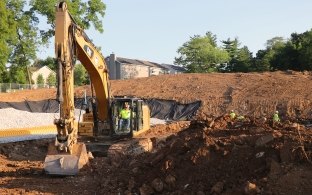
Trench safety is critical on any civil construction jobsite. Without proper protection, workers face serious risk from cave-ins, falling loads, as well as oxygen-deficient and other hazardous atmospheres. Sound trenching and excavation safety practices protect crews, keep projects on schedule and help contractors meet their legal obligations.
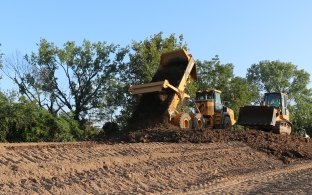
Castle Contracting applies that discipline to excavation projects across the Midwest. Here are the essentials of trench safety every project owner should know.
What Is Trench Safety?
Trench safety refers to the systems, methods and protocols that protect workers from a collapse and other hazards, during excavation and trenching work. OSHA defines a trench as a narrow excavation, deeper than it is wide, with a maximum width of 15 feet at the bottom. Excavations that exceed this ratio or width fall under different standards, though many of the same protective principles apply.
Cave-ins are the leading cause of fatalities in trenching work. The risk increases significantly in unstable or previously disturbed soil, near surcharge loads and after rainfall.
OSHA Trench Safety Requirements
OSHA trench safety regulations apply to any excavation five feet or deeper. At that depth, contractors must implement a protective system unless the excavation is in stable rock. For excavations that are 20 feet or deeper, a registered professional engineer must design the protective system.
Key OSHA requirements include:
- A competent person must inspect the trench before each shift and after any event that could affect ground stability.
- Every worker must have a means of egress (ladder, ramp or steps) within 25 feet.
- Contractors must control water accumulation before workers enter.
- Spoil piles must sit at least two feet from the trench edge.
What Causes a Trench Collapse?
By evaluating potential trench collapse risks before work begins, project teams can choose the right protective systems. Common causes of a cave-in include:
- Soil type – Loose, granular or previously disturbed soils are prone to sliding.
- Surcharge loads – Equipment, spoil piles (excavated material) or other materials sitting too close to the trench edge add pressure to the trench wall.
- Unsupported utilities – Exposed underground lines can shift and contribute to wall failure during excavation.
- Vibration – Nearby equipment operation or traffic can progressively destabilize trench walls.
- Water infiltration – Rainfall and groundwater saturate soil, significantly reducing its stability.
Shoring in Construction: Methods and Applications
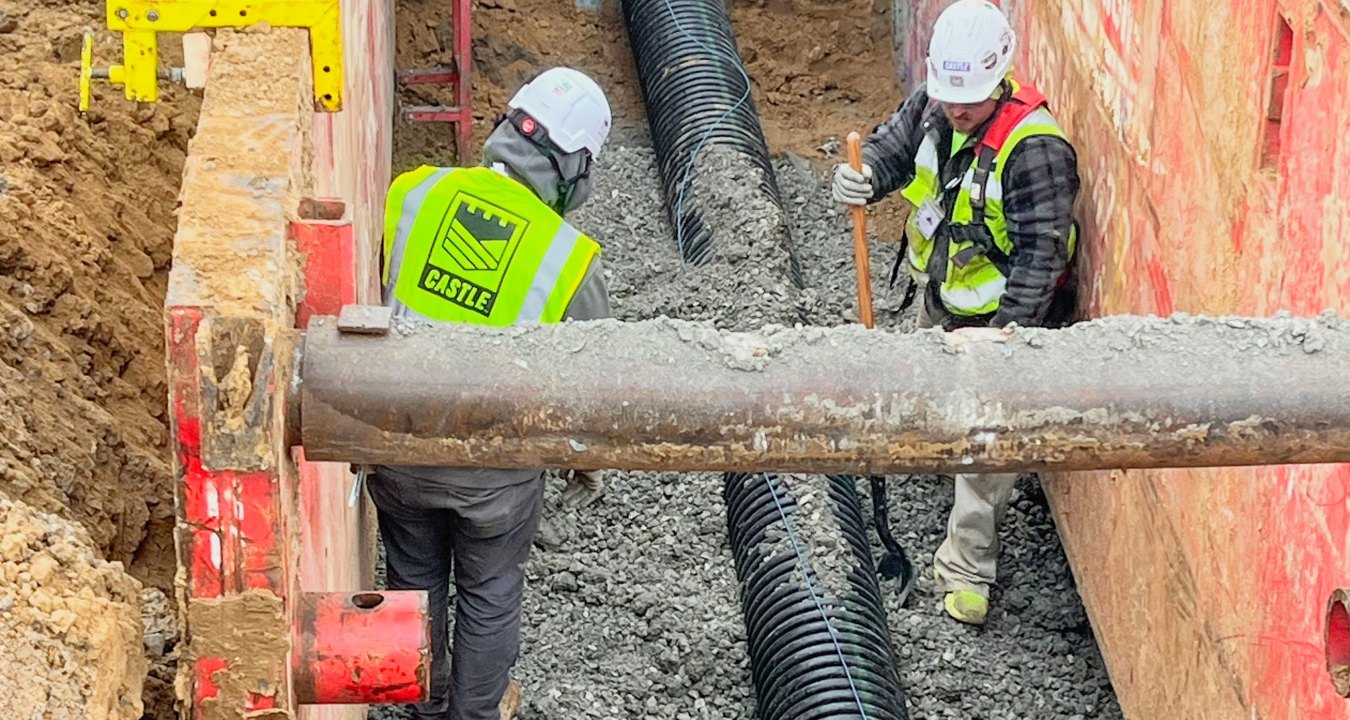
The purpose of shoring in construction is to support trench walls and prevent collapse while crews work below. Shoring is one of the most common trench protection systems on civil construction jobsites because it works well with poor soil conditions or tight footprints. These benefits often make shoring the preferred choice over sloping.
Common shoring types include:
- Beam and plate shoring – Crews drive steel or aluminum sheeting into the ground alongside the trench for deeper or more demanding trench shoring construction applications.
- Hydraulic shoring – Aluminum or steel cylinders expand to hold trench walls apart. Crews can install hydraulic shoring quickly across a diverse range of soil conditions.
- Screw jack shoring – A manual alternative to hydraulic systems, these mechanical devices expand horizontally across the trench to brace the walls. Screw jacks work best in shallower excavations with stable soil.
Choosing the right shoring method depends on trench depth, soil classification, groundwater conditions and the presence of nearby structures or utilities.
Trench Shielding
Crews place a steel or aluminum trench box, also called a trench shield, inside an excavation to protect workers. Unlike shoring, a shield does not brace the surrounding soil. Workers operate inside a protected zone that keeps them safe even if the walls shift.
Trench shielding applications include longer pipeline and utility runs where the work area advances incrementally. The primary benefits of trench shielding are efficiency and versatility: crews can install shields faster than shoring systems, and the method performs well in stable-to-moderately unstable soils.
Trench Benching and Sloping
Benching and sloping reshape the excavation, eliminating the need for vertical trench walls or other installed support systems. These approaches effectively reduce collapse risk, but they are only applicable where the available footprint allows for a wider opening.
What Is Benching in Excavation?
Crews cut horizontal steps into the trench wall to create a staircase profile. Trench benching redistributes soil pressure across multiple levels rather than concentrating it on a single vertical face. OSHA does not permit benching in Type C soils (the least stable classification), but the method works well in more stable soil conditions.
When is benching considered an effective trench protection method? It works best when the soil is stable enough to hold its shape, the trench depth is manageable and the jobsite footprint can accommodate the stepped geometry without disrupting work.
What Are Trench Sloping and Step Trenching?
Trench sloping refers to cutting trench walls back at an angle, so the top edges are further apart than the base of the trench is wide. OSHA defines allowable slope ratios by soil type. Type A soils permit a 0.75:1 slope, while Type C soils require a shallower 1.5:1 ratio.
Step trenching refers to making a series of angled cuts at different depths, combining elements of sloping and benching to manage deeper excavations.
Trench Protection Systems: How to Choose
No single approach fits every situation. The right trench protection system depends on a combination of site-specific factors:
- Groundwater and drainage – Wet conditions reduce soil stability and often push teams toward shoring or shielding over sloping.
- Proximity to structures and utilities – Adjacent foundations, roads or underground lines may limit sloping angles, requiring engineered shoring solutions instead.
- Soil classification – OSHA's Type A, B and C classifications for soil determine feasible slope ratios, benching eligibility and shoring design requirements.
- Trench depth and width – Deeper trenches require more robust systems; wider excavations may allow sloping, while narrow ones typically require shoring or shielding.
- Work duration – Short-term work in acceptable soil may justify a simpler protective approach than a long trench run or multi-day operation.
A competent person with current OSHA training should evaluate these factors before any crew enters an excavation.
Trench Safety Starts Before the First Shovel Hits
Experienced civil contractors plan for trench safety at the start of a project, not as an afterthought. Regulatory requirements set the floor for trench safety, not the ceiling. From soil classification and equipment selection to on-site safety management, Castle Contracting plans trench protection with the same care it brings to every phase of an excavation project.